Announcing the BRN Faculty Fellows 3.0


The Black Research Network is pleased to announce the recipients of the BRN Faculty Fellowship 3.0.
The year-long program provides $10,000 to support tenure- and teaching-stream faculty at the University of Toronto, helping advance scholarship in any academic or multidisciplinary field.
This year’s fellows will also serve on the Black Research Network Advisory Committee (BRNAC), which brings together Black-identified members at different stages of their academic careers to shape BRN programming, foster collaboration and strengthen community partnerships.
Since its launch in 2023, the fellowship has advanced faculty research agendas with $110,000 in funding.

Derefe Chevannes is an assistant professor in the department of political science in the Faculty of Arts & Science.
Chevannes’ forthcoming manuscript examines how “citizenship” has often excluded Black people in the Caribbean and the United States. It traces the legacy of slavery and colonialism through two geographic and historical periods: post-slavery rebellions in the Caribbean and the effects of emancipation, including Jim Crow, mass incarceration and colourblind politics in the U.S. The manuscript argues that sovereignty has produced a “myth of Black citizenship” that can both grant and deny rights.
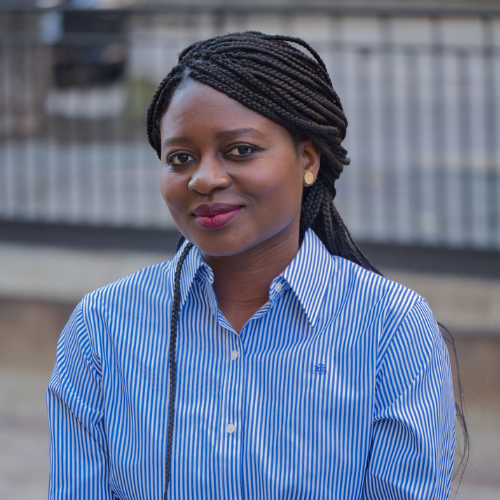
Nadège Compaoré is an assistant professor in the department of political science at the University of Toronto Mississauga.
Drawing on interviews with government, corporate and civil society actors, Compaoré’s forthcoming book re-examines the 1962 UN principle of Permanent Sovereignty over Natural Resources and shows how African countries often follow extractive practices that mirror colonial patterns. Her second project explores Black self-determination in Canada through the life of Mifflin Wistar Gibbs, the first Black politician in British Columbia, uncovering the networks, actors and ideas that shaped Black internationalism and Pan-Africanism in the Canadian context.

Hadiya Roderique is an assistant professor of journalism in the department of arts, culture and media at the University of Toronto Scarborough.
Roderique’s research examines how journalism engages with and represents historically marginalized communities. Drawing on journalism, critical race, Black and Indigenous studies, and media ethics, her work examines how racism and inequity are embedded and reproduced in journalism to develop practical tools and strategies to debias, decolonize and reshape journalism production and practices.

SA Smythe is an associate professor in the Faculty of Information and director of the Collaboratory for Black Poiēsis, a multidisciplinary hub bridging scholarship, Black-Indigenous arts practices and digital archiving. The collaboratory supports archival research, international collaboration and public programming that connects academic and community audiences.
Smythe’s research examines Black Mediterranean histories, migrant experiences and Black cultural production. It focuses on how migrants and Black artists challenge dominant understandings of humanitarianism, borders and citizenship, and how they theorize their lived conditions through aesthetic and communal practice. Drawing on performance, visual culture, literature and community-engaged research, Smythe’s work also explores how Black aesthetic practices can imagine collective worlds beyond the nation-state.

Recent News